Finding a puddle under your water heater is a stomach-drop moment, but a leak does not have to turn into a flooded garage. The key is to act calmly and in the right order. Here is the same checklist we walk Central Coast homeowners through over the phone when they call in a panic.
Step 1: Shut Off the Power
Before you touch anything wet, cut the power to the heater. For an electric unit, switch off the breaker that feeds it at your main panel. For a gas unit, turn the gas control dial to the off position. Do not skip this step, since water and live power do not mix and the burner should not keep firing on a draining tank.
Step 2: Shut Off the Water
Find the cold water shutoff valve on the pipe running into the top of the heater and turn it clockwise until it stops. That cuts the supply feeding the leak. If that valve is stuck or you cannot find it, shut off the main water valve for the whole house instead. Stopping the flow buys you time and limits the damage.
Step 3: Find Where It Is Leaking From
Where the water is coming from tells you a lot about how serious it is. Dry the area, then watch for a few minutes:
- Top of the tank: Often a loose or corroded supply connection. This is frequently a repair, not a replacement.
- The temperature and pressure relief valve: The valve on the side or top that pipes down toward the floor. If it is dripping, the tank pressure may be too high. This needs a plumber's attention but the tank itself may be fine.
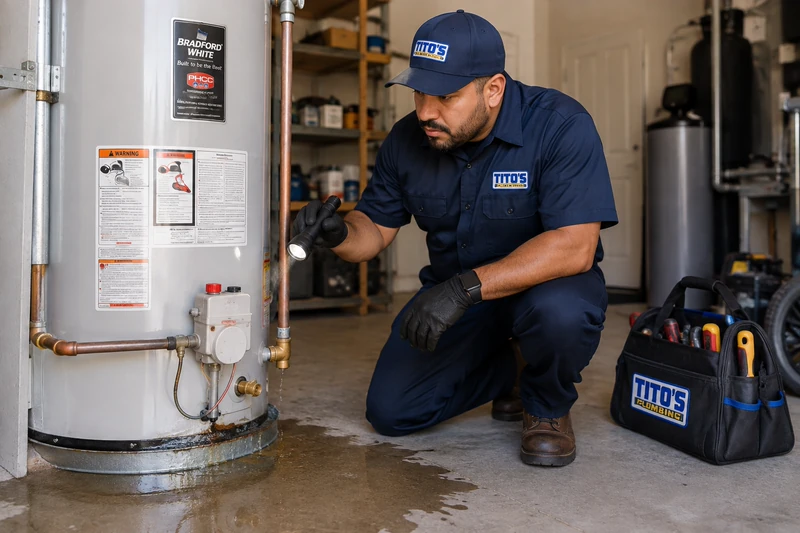
- Bottom of the tank: This is the one we hate to see. A leak from the base usually means the inner tank has rusted through, and that cannot be repaired. The heater needs replacing.
Step 4: Drain and Clean Up
Mop up standing water quickly to protect your floor and anything stored nearby, and move boxes or belongings out of the way. If the leak is steady, you can attach a hose to the drain valve at the base of the tank and run it to a floor drain or outside to empty it safely.
When to Call a Plumber
A small drip from a fitting might wait until morning. Water pooling at the base, a relief valve that keeps discharging, or any leak you cannot stop should not wait. The average tank holds 40 to 50 gallons, and all of it can end up on your floor. We answer emergency calls 24 hours a day for exactly this reason, and the office will give you a realistic arrival window rather than leaving you guessing.
Most tank heaters last 8 to 12 years, so if yours is in that range and leaking from the bottom, it is likely time for a replacement rather than a patch. When you call, we will help you figure out whether you are looking at a quick repair or a new unit, talk you through tank versus tankless if it is time to replace, and give you a flat-rate price before any work begins. No pressure, just a straight answer when you need one most.